

Artificial intelligence tools are becoming part of everyday operations for many charities and non-profits in British Columbia. Staff and volunteers are using platforms like ChatGPT to draft emails, write grant applications, create social media content, summarize meeting notes, and organize ideas more efficiently. While these tools offer real benefits, they also raise important legal and operational concerns that many organizations have not yet fully considered.
We are increasingly hearing from charities that want to understand how AI fits within their existing Charity Law, governance, and privacy obligations. In many cases, these tools are already being used informally, without internal policies or safeguards in place. Before relying heavily on them, organizations need to understand the potential risks and take practical steps to protect sensitive information and maintain public trust.
Understanding Privacy and Confidentiality Risks
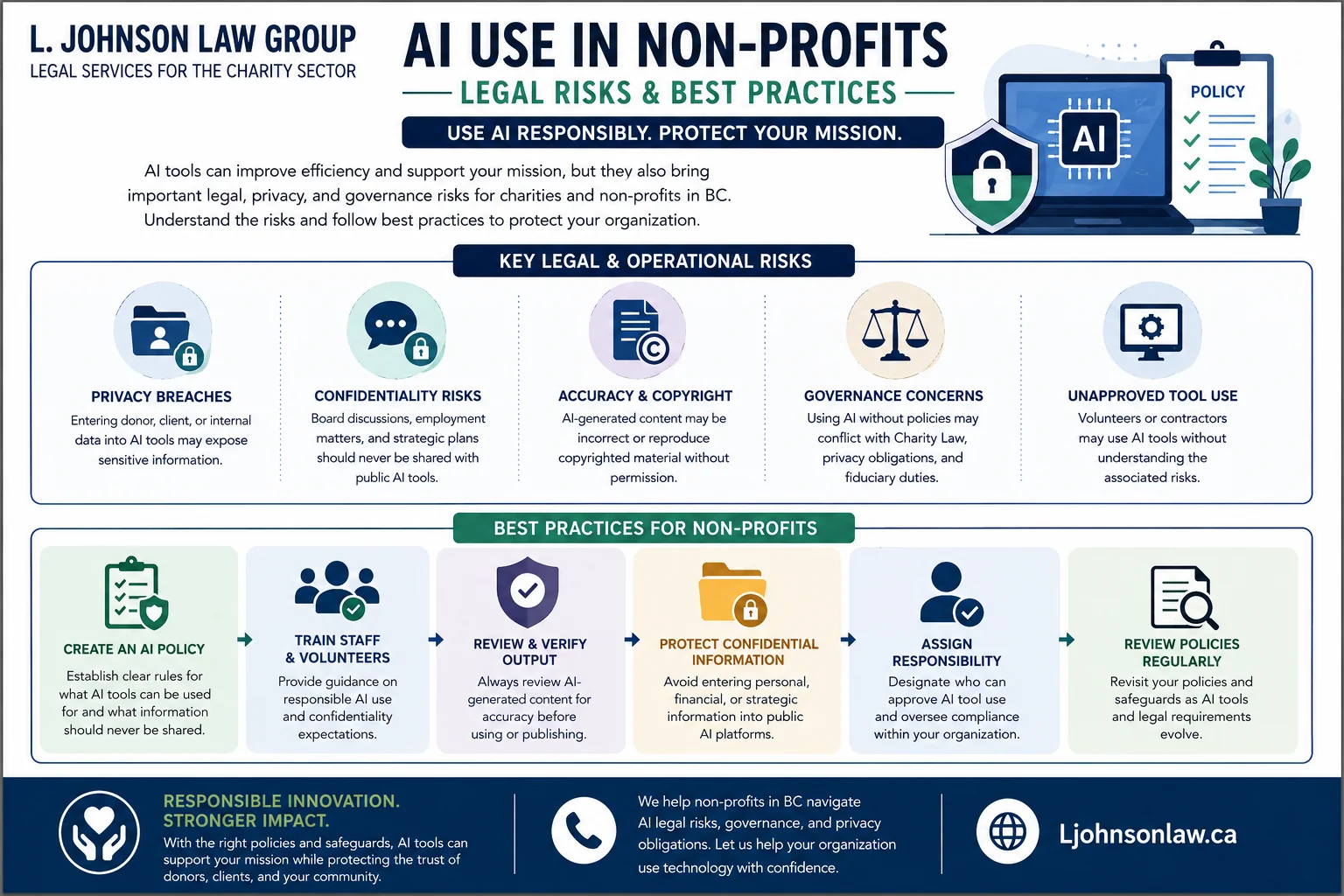
One of the most significant concerns surrounding AI use in the non-profit sector involves privacy and confidentiality. Many AI platforms process information entered by users in ways that are not always transparent or well understood. This creates real risks when staff or volunteers input donor information, client records, financial details, or confidential internal discussions into external AI systems.
Charity data privacy in BC is a serious responsibility. Non-profits often handle highly sensitive personal information, particularly when working with vulnerable individuals or delivering community support programs. Even well-intentioned staff members can unintentionally expose private information while simply trying to save time or work more efficiently.
Confidentiality obligations do not disappear because a task is being handled by technology. Information shared through AI platforms may be stored, processed, or used in ways that conflict with your organization’s privacy practices or legal obligations. Without clear internal guidance, there is a genuine risk that volunteers or employees could unknowingly undermine donor confidence or client trust.
Internal governance and communications carry risks as well. Board discussions, employment matters, funding concerns, and strategic planning documents may contain confidential information that should never be entered into public AI systems. During periods of organizational stress or transition, protecting that information becomes even more critical.
AI legal risks for charities extend beyond privacy. Organizations should also consider whether AI-generated content might unintentionally reproduce copyrighted material or present inaccurate information as fact. AI tools can produce polished content quickly, but that output still requires careful human review before it is used or published.
Why Non-Profits Need Clear AI Policies
As AI becomes more embedded in daily operations, charities should consider developing an internal AI policy that defines how these tools may and may not be used. Many organizations already have policies covering technology use, confidentiality, and records management. AI should be treated as part of that broader governance framework rather than something separate from it.
A clear nonprofit technology policy in BC helps set expectations for staff, volunteers, board members, and contractors. This might include guidance on what types of information should never be entered into AI systems, how AI-generated content should be reviewed before use, and who is authorized to use these tools on behalf of the organization.
Volunteers and contractors deserve particular attention in this conversation. Many charities depend heavily on external support, and individuals may use AI tools on their own initiative without fully appreciating the risks involved. Clear communication and accessible training can help ensure that everyone connected to the organization understands what is expected around confidentiality and responsible technology use.
Accuracy and accountability are equally important considerations. AI tools can generate incorrect or misleading information with apparent confidence, particularly when producing content related to legal, financial, or governance matters. Decisions should never be made based solely on AI-generated advice without review by a qualified person.
Having a policy in place is not about discouraging innovation. It is about creating structure and reducing uncertainty as these technologies continue to develop and evolve.
Read More: Understanding the Legal Definition of a Charity in Canada
Creating Practical Safeguards for Your Organization
Most charities do not need to avoid AI entirely. Used thoughtfully, these tools can genuinely improve efficiency and support administrative work. The key is ensuring that appropriate safeguards exist before sensitive information or core organizational processes become too dependent on technology that is not yet fully understood.
Practical safeguards might include restricting AI use for confidential matters, providing staff training, reviewing the privacy policies of third-party platforms, and ensuring that all AI-generated materials are reviewed by a human before being published or acted upon. Organizations should also revisit existing confidentiality agreements and technology policies to confirm they remain current and relevant.
An AI policy for non-profits should reflect the specific work your organization does and the nature of the information it handles. A small arts organization faces different risks than a charity working with health data or vulnerable populations. Taking the time to assess those risks now is far easier than addressing the consequences of a problem later.
Read More: What Happens When a Charity Receives a Restricted Donation It Cannot Use?
At L. Johnson Law Group, we assist charities and non-profits with governance, privacy, and technology-related legal matters, including developing practical nonprofit technology policies in BC. If your organization is beginning to use AI tools or would benefit from guidance on managing AI legal risks for charities, we are here to help. We welcome you to reach out and discuss how your organization can embrace emerging technology responsibly while continuing to protect the people and communities you serve.
Contact L. Johnson Law Group today to discuss practical AI policies and legal guidance tailored to your charity or non-profit organization.