
Starting a non-profit organization is an exciting step. Whether your goal is to support a local community, advance education, promote the arts, or provide charitable services, incorporating your organization creates a legal foundation that can help it grow and operate effectively. We often meet individuals who are passionate about a cause but are unsure where to begin or what legal requirements they need to meet before launching their organization.
Incorporating a non-profit in British Columbia involves more than filing paperwork. It requires thoughtful planning, a clear governance structure, and an understanding of the legal responsibilities that come with operating a society. Taking the right steps from the beginning can help avoid costly issues later and position your organization for long-term success.
Understanding the Incorporation Process
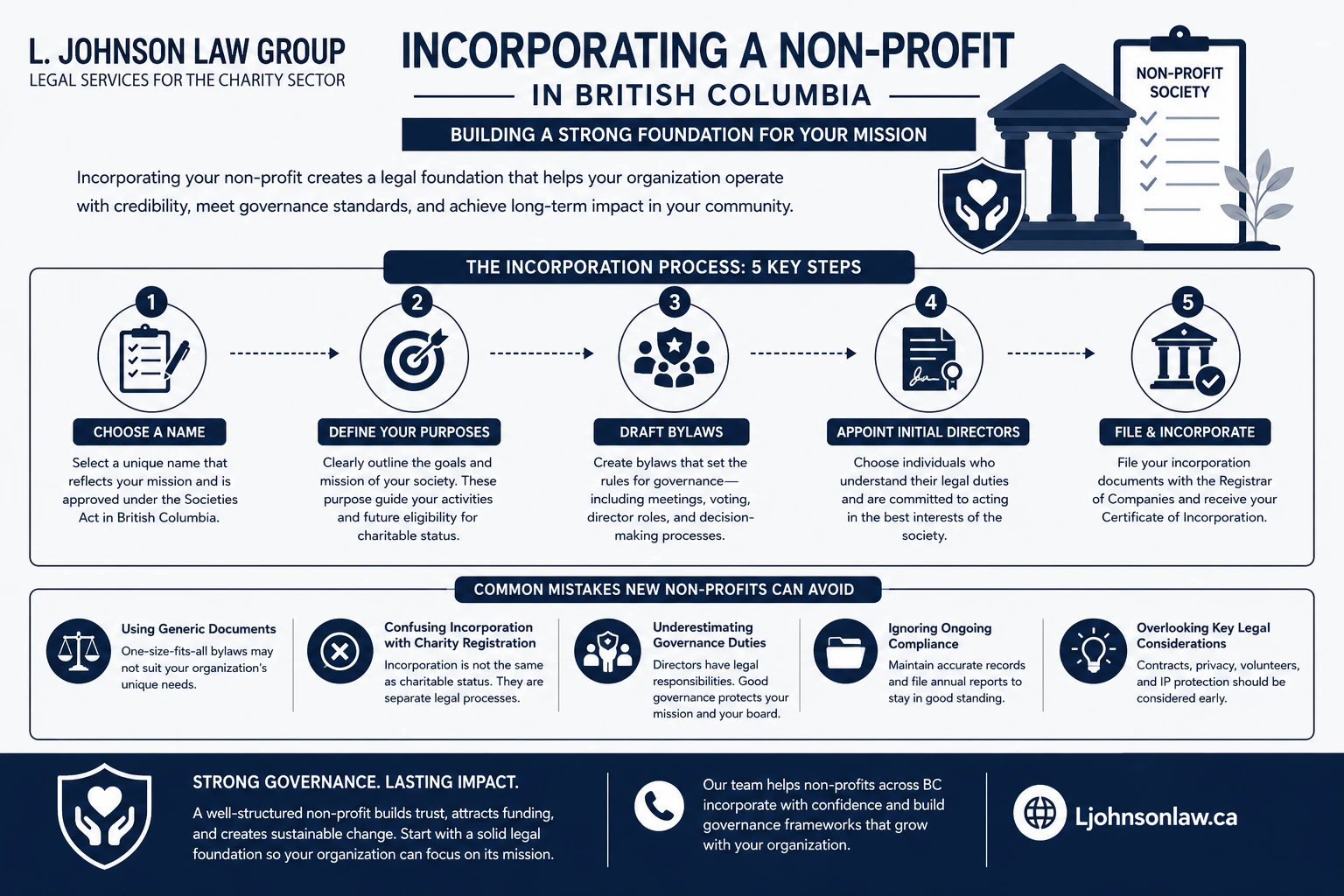
In British Columbia, most non-profit organizations are incorporated under the Societies Act. Incorporation creates a separate legal entity, meaning the society can own property, enter into contracts, and continue operating independently of its members or directors. This structure may also provide greater credibility when seeking grants, donations, or community partnerships.
One of the first steps is choosing an appropriate name for the organization. The proposed name must be approved before incorporation and should clearly distinguish the society from existing organizations. It is also worth considering whether the name reflects your mission and whether trademark protection may be appropriate.
The organization must also establish its purposes. These explain why the society exists and guide its activities. They should be carefully drafted because they influence how the organization operates and, if charitable status is being considered in the future, they will be reviewed by the Canada Revenue Agency.
Another important requirement is preparing the society’s bylaws. These establish how the organization will be governed, including how directors are elected, how meetings are conducted, how members vote, and how important decisions are made. While the Societies Act provides default rules, well-drafted bylaws help prevent misunderstandings and provide clear guidance as the organization evolves.
Incorporation also requires appointing the initial directors. Directors play an important governance role and have legal duties to act honestly, in good faith, and in the best interests of the society. Choosing individuals who understand these responsibilities helps create a strong foundation from the outset.
Common Mistakes New Non-Profits Can Avoid
Many new organizations focus primarily on their mission and assume the legal structure can be addressed later. While enthusiasm is important, overlooking governance at the beginning can create challenges that become more difficult to correct over time.
One common mistake is using generic incorporation documents or bylaws without considering the organization’s specific needs. Every non-profit operates differently, and governance documents should reflect how the organization intends to function. Provisions that work well for one society may not be appropriate for another.
Another issue arises when founders confuse incorporation with charitable registration. Incorporating a society in British Columbia does not automatically make it a registered charity. Charity law involves separate legal considerations, and charitable status is a separate application process administered by the Canada Revenue Agency, with its own eligibility requirements and ongoing reporting obligations. Organizations should understand this distinction clearly before they begin fundraising or try to issue donation receipts.
Governance responsibilities are another area that is often underestimated. Directors are responsible for overseeing the organization’s affairs, ensuring compliance with applicable law, maintaining proper records, exercising reasonable care, diligence and skill, and acting in the best interests of the society. Maintaining accurate corporate records and meeting annual filing obligations is an essential part of staying in good standing and avoiding dissolution.
We also encourage organizations to think ahead about contracts, privacy, volunteer management, and intellectual property. While these issues may not feel urgent during incorporation, addressing them early often prevents problems as programs expand and new partnerships are formed.
Read More: Protecting Your Non-Profit Intellectual Property, Brand and Assets in BC
Building a Strong Foundation for the Future
Incorporating a non-profit is more than creating a legal entity. It is an opportunity to establish governance practices that support accountability, transparency, and sustainable growth. Understanding how corporate law applies to your organization can also help ensure that its legal and governance requirements are properly addressed. A well-structured organization is better positioned to attract qualified board members, secure funding, and earn the confidence of donors, volunteers, and community partners.
As your organization develops, your legal needs will continue to evolve. Board composition may change, bylaws may require updates, and new legal considerations may arise as programs expand or charitable status is pursued. Beginning with a solid legal framework makes it much easier to adapt to those changes over time.
We believe every organization deserves a strong start. Careful planning at the incorporation stage can help reduce future risks and allow your board to focus on advancing its mission rather than resolving avoidable governance issues.
At L. Johnson Law Group, we work with charities and non-profit organizations throughout British Columbia to guide them through the incorporation process and establish practical governance structures that support long-term success. If you are considering incorporating a non-profit or need guidance on the legal requirements involved, our team is here to help. Contact L. Johnson Law Group today to discuss your non-profit incorporation needs and take the first step toward building a strong legal foundation for your organization.